
SAP EWM Training: Complete Guide for Beginners
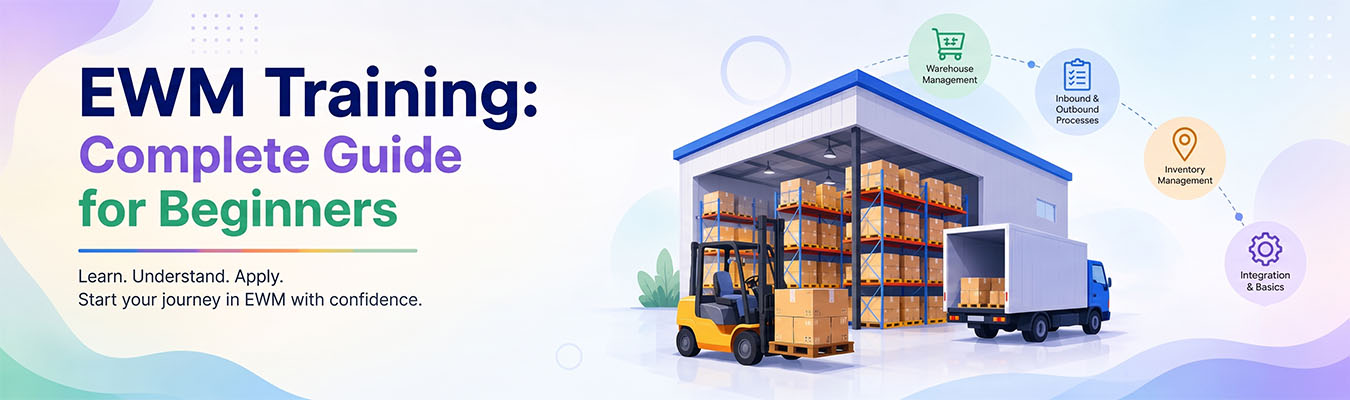
Gone are those days when a grocery store used to have a manual accounts book for all its stock. Now, a huge online store with 100 times more products can easily keep track of items in its warehouse without losing a tiny thing. No manual book, no product-by-product data entry, but everything is automated. Have you ever wondered what makes it possible?
The answer is a smart software system called SAP EWM. If you are curious about starting a career in supply chain or warehouse technology, SAP EWM training is a great place to begin. This guide breaks everything down in simple words so you can understand it easily.
What is SAP EWM
SAP EWM stands for SAP Extended Warehouse Management. It is a software system made by a company called SAP. This system helps businesses manage everything that happens inside a warehouse, like storing items, packing them, and sending them out to customers.
Think of a warehouse as a giant toy box with thousands of toys inside. Without a system, it would be really hard to find one specific toy quickly. SAP EWM acts like a super-smart helper that always knows exactly where every toy is kept and how to get it out fast. That is why so many big companies use it, and why SAP EWM training has become so valuable for people who want warehouse or supply chain jobs.
Features
SAP EWM comes packed with helpful tools. Here are some of its most useful features:
- Storage bin management: It keeps track of every single shelf and spot in the warehouse.
- Inbound and outbound processing: It manages items coming into the warehouse and items going out to customers.
- Labor management: It helps track how warehouse workers are performing their tasks.
- Yard management: It keeps an eye on trucks and trailers waiting outside the warehouse.
- Real-time tracking: It shows exactly where every product is at any given moment.
These features are usually the first things covered in any warehouse management training program, since they form the base of how the whole system works.
Benefits
Why do companies invest time and money into SAP EWM? Because it brings real advantages, such as:
- Fewer mistakes: The system reduces human errors when picking or storing items.
- Faster deliveries: Orders move through the warehouse quickly, so customers get their packages sooner.
- Better space usage: It helps companies use every corner of their warehouse wisely.
- Cost savings: Efficient warehouses mean less wasted time and money.
- Clear reports: Managers can see useful data about how the warehouse is performing.
For someone taking SAP EWM training, understanding these benefits helps explain why companies are willing to pay skilled professionals to run this system well.
Use Cases
SAP EWM is not just for one type of business. It is used in many industries, including:
- Retail companies that need to send products to stores or straight to customers’ homes.
- Manufacturing plants that must manage raw materials and finished goods.
- Pharmaceutical companies that need to track medicines carefully and safely.
- Automotive businesses that handle thousands of small parts every day.
- E-commerce giants that ship millions of packages worldwide.
Each of these industries relies on warehouse management training to make sure their teams know how to use SAP EWM properly and avoid costly errors.
Career Scope
Learning SAP EWM can open up some exciting job opportunities. Companies around the world are looking for people who understand warehouse technology, and this demand is only growing as online shopping keeps expanding.
After completing SAP EWM training, you could aim for roles like:
- SAP EWM Consultant
- Warehouse Operations Analyst
- Supply Chain Specialist
- SAP Functional Consultant
Many professionals also choose to get an official SAP EWM certification. This certificate proves to employers that you have real, tested knowledge of the system, which can help you stand out when applying for jobs.
Final Thought
In short, SAP EWM is a powerful tool that keeps warehouses running smoothly, and learning it through proper training can lead to a rewarding career in the growing world of supply chain technology.